Designing Car Dealerships for the EV Revolution: Architecture for a Changing Market

A Market in Transformation

The automotive industry is in the midst of its most significant transformation in over a century. Electric vehicles have moved from niche products to mainstream options, and every major manufacturer is investing heavily in their EV lineup. This shift isn’t just changing what we drive—it’s changing where and how those vehicles are sold. Dealerships, once designed primarily for gasoline-powered cars, now face a new set of architectural challenges. At Penney Design Group, we’ve been working with manufacturers and dealer groups to design facilities that aren’t just ready for EVs today, but can evolve with the market over the next decade.
designing car dealerships for the ev revolution 4

Charging as a Core Experience

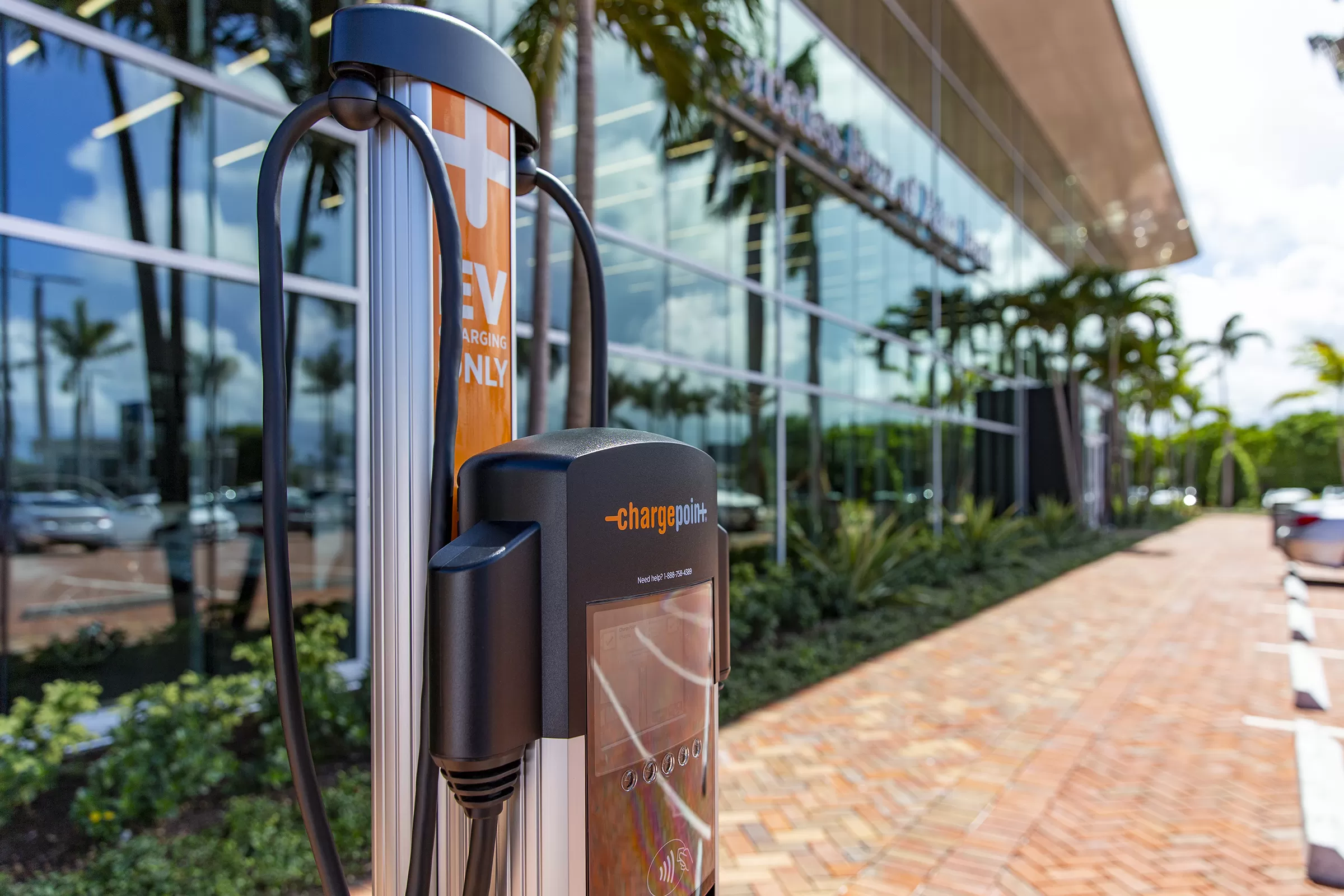
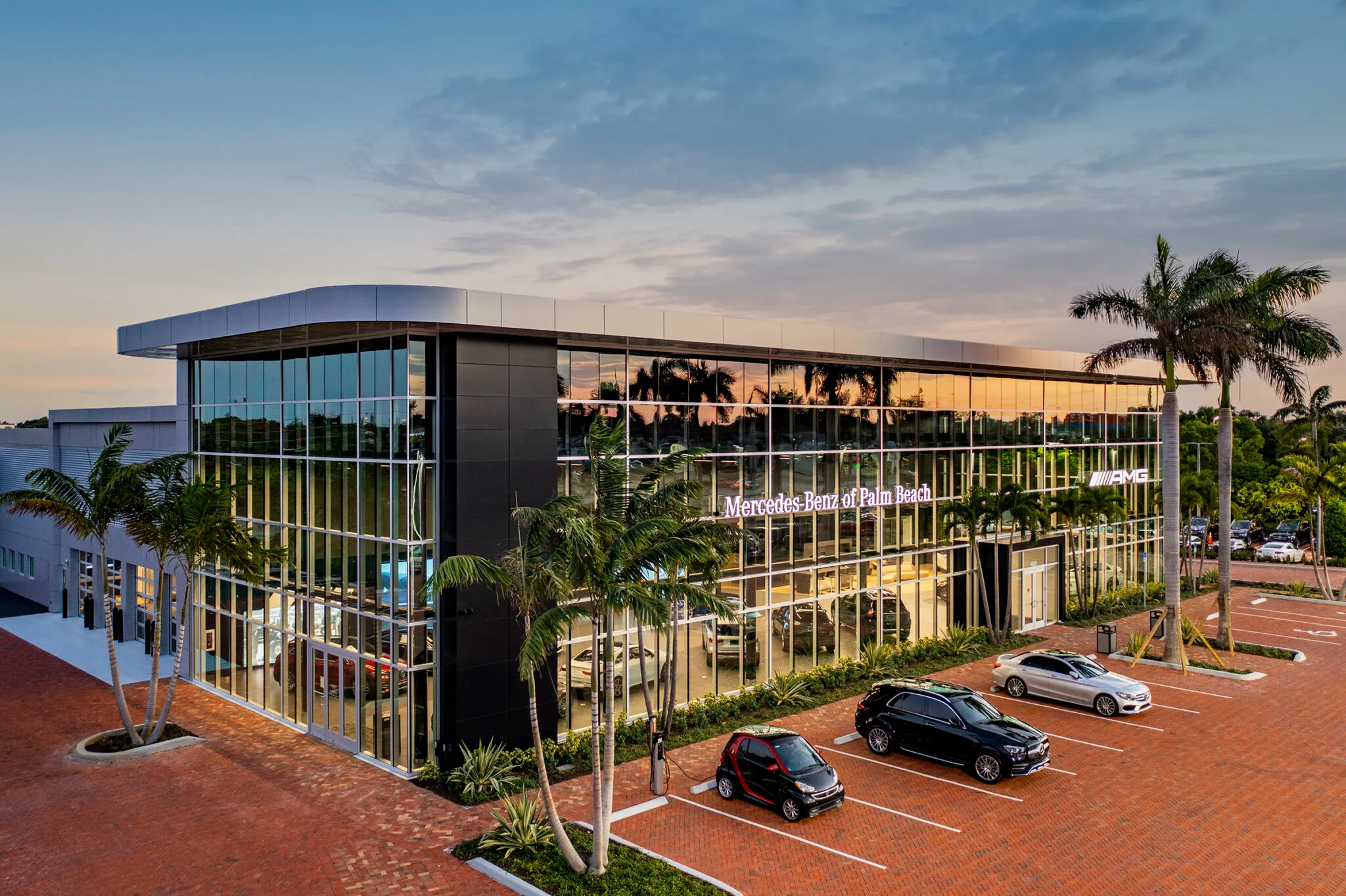
One of the most visible changes in dealership design is the integration of charging infrastructure. Unlike a traditional fuel pump, which customers rarely use at the dealership, EV chargers can be part of the showroom, the service center, and even the customer waiting experience. This requires careful planning—chargers must be easily accessible but not disruptive to vehicle flow, and their placement must work for both short-term visits and longer service appointments.

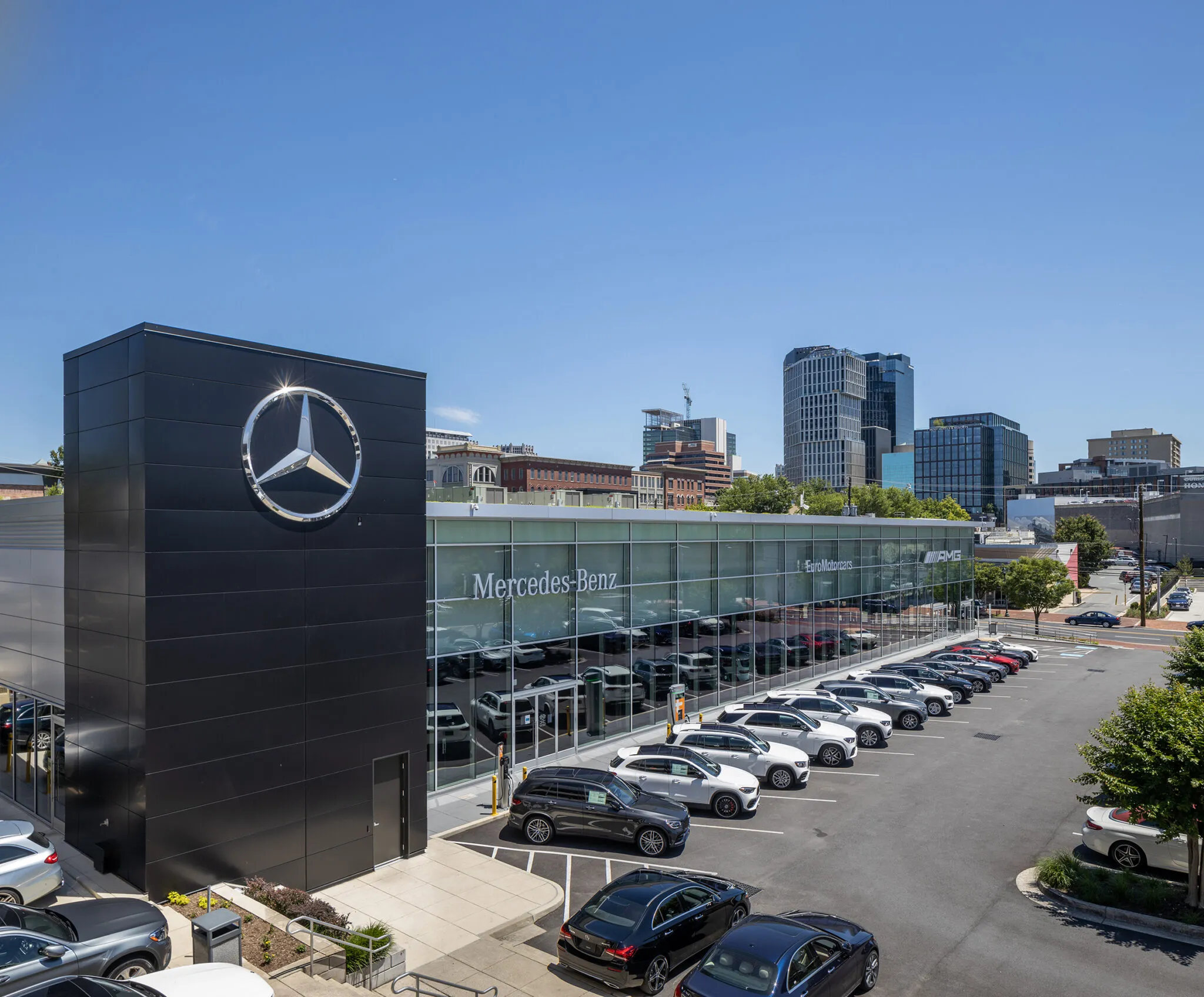
We’re designing spaces where chargers are seamlessly incorporated into the architecture, whether that means a bank of fast chargers at the service entrance, integrated chargers in the delivery bay, or customer parking equipped for top-ups during a sales appointment. These placements also serve a branding purpose—showing customers that the dealership is a leader in EV technology.
designing car dealerships for the ev revolution 1

Powering the Future

Charging stations require more than just parking spots and pedestals—they demand serious electrical capacity. Future-ready dealership design means accounting for higher loads from the outset. In some cases, we design mechanical rooms and conduit runs to support three or four times the current charging needs, ensuring the infrastructure is in place when the EV portion of the lineup grows.

Battery storage systems are also becoming part of the conversation. These systems can store energy during off-peak hours and deploy it when demand spikes, reducing costs and strain on the grid. We’ve worked on designs that include dedicated space for these systems so they can be added as the dealership’s needs evolve.

designing car dealerships for the ev revolution 2

Rethinking the Service Department

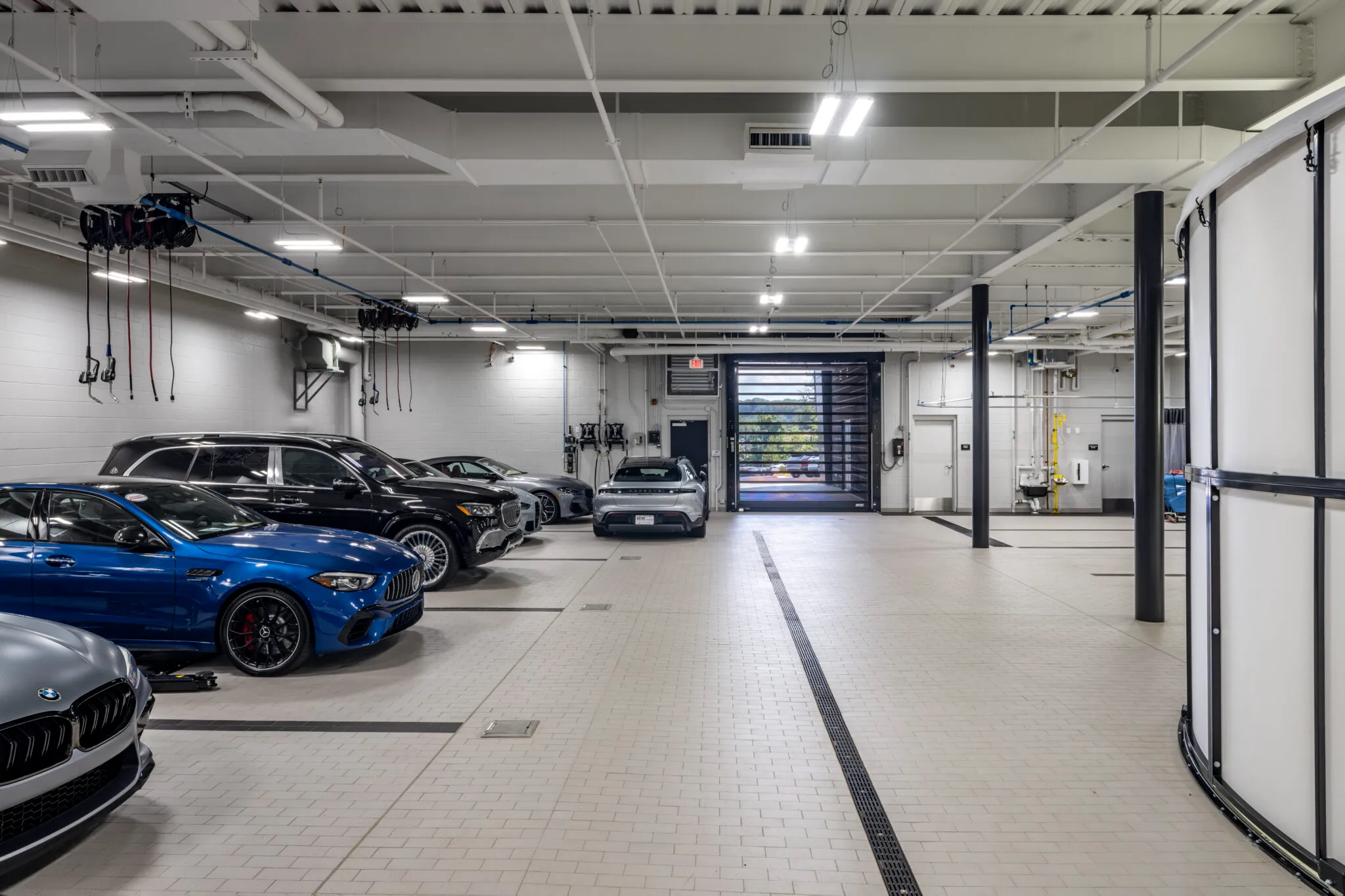
EVs change the nature of service work. Without oil changes or complex combustion systems, service bays are being reimagined for diagnostics, battery replacement, and software updates. This shift has spatial implications—less space for fluids and parts storage, more space for specialized lifts, battery handling equipment, and EV-safe work areas.

In our designs, we’re integrating service bays that can handle both EV and traditional vehicles, allowing dealerships to serve today’s mixed fleet while being ready for tomorrow’s electric dominance. This flexibility ensures service departments stay productive and relevant through the transition.

Customer Spaces and Education

For many customers, buying an EV is a completely new experience. Dealerships play a key role in educating buyers on charging, range, and maintenance. This means architecture needs to support learning spaces—whether it’s a consultation area with digital displays, an interactive charging demo zone, or even a visible installation where customers can see how the charging systems work.

These features aren’t just functional—they help build trust. Customers leave feeling informed, confident, and supported in their decision to go electric.

Outdoor Planning and Site Design

The rise of EVs has site-wide implications. More chargers mean different parking patterns, which affect circulation, lighting, and even landscaping. We consider how charging zones are lit for safety and usability, how traffic moves in and out without congestion, and how to integrate chargers without compromising the aesthetic of the property.

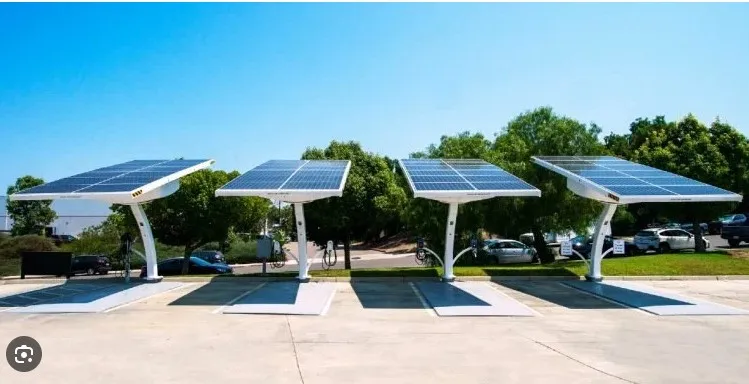
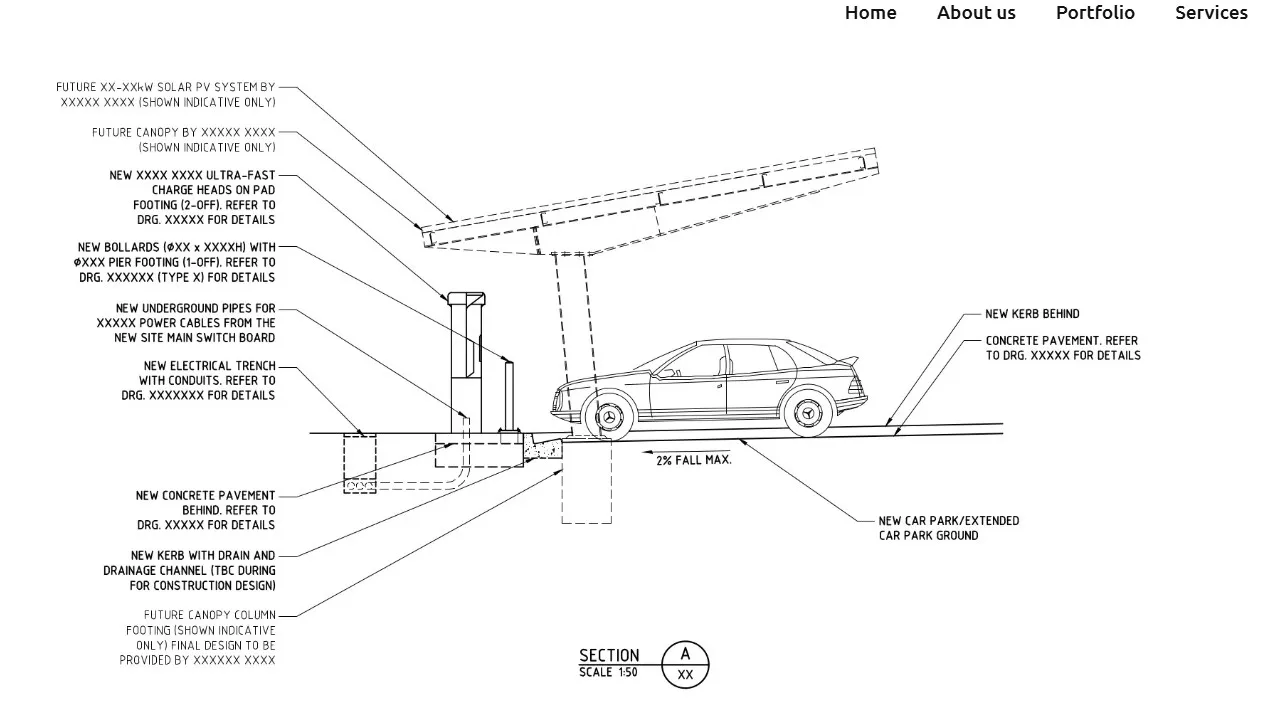
We’re also factoring in the possibility of solar canopies over EV charging areas. These not only provide shade and weather protection but also generate renewable energy to feed directly into the dealership’s operations or its charging infrastructure.
designing car dealerships for the ev revolution 5

Future-Proofing the Investment

The pace of EV adoption is accelerating, but no one can predict the exact timeline. That’s why our EV-focused dealership designs are grounded in flexibility. We plan for scalable infrastructure, adaptable interior spaces, and site layouts that can evolve without major disruption. This ensures dealerships can respond to customer demand, OEM requirements, and new technology without starting from scratch.

Our Perspective

At Penney Design Group, we see the EV revolution not as a challenge but as an opportunity for innovation. By integrating charging infrastructure into the customer journey, future-proofing power and service capabilities, and designing spaces that educate and inspire, we’re helping dealerships become leaders in a rapidly changing market. In our view, the dealerships that succeed in the EV era will be the ones that see this as more than a technical upgrade—it’s a complete rethinking of how the dealership fits into the customer’s life and the community it serves.
designing car dealerships for the ev revolution 3

Select Auto Imports: A Modern Landmark in Alexandria’s Automotive Scene

17,000 SF | 3 Stories | Automotive Sales & Service

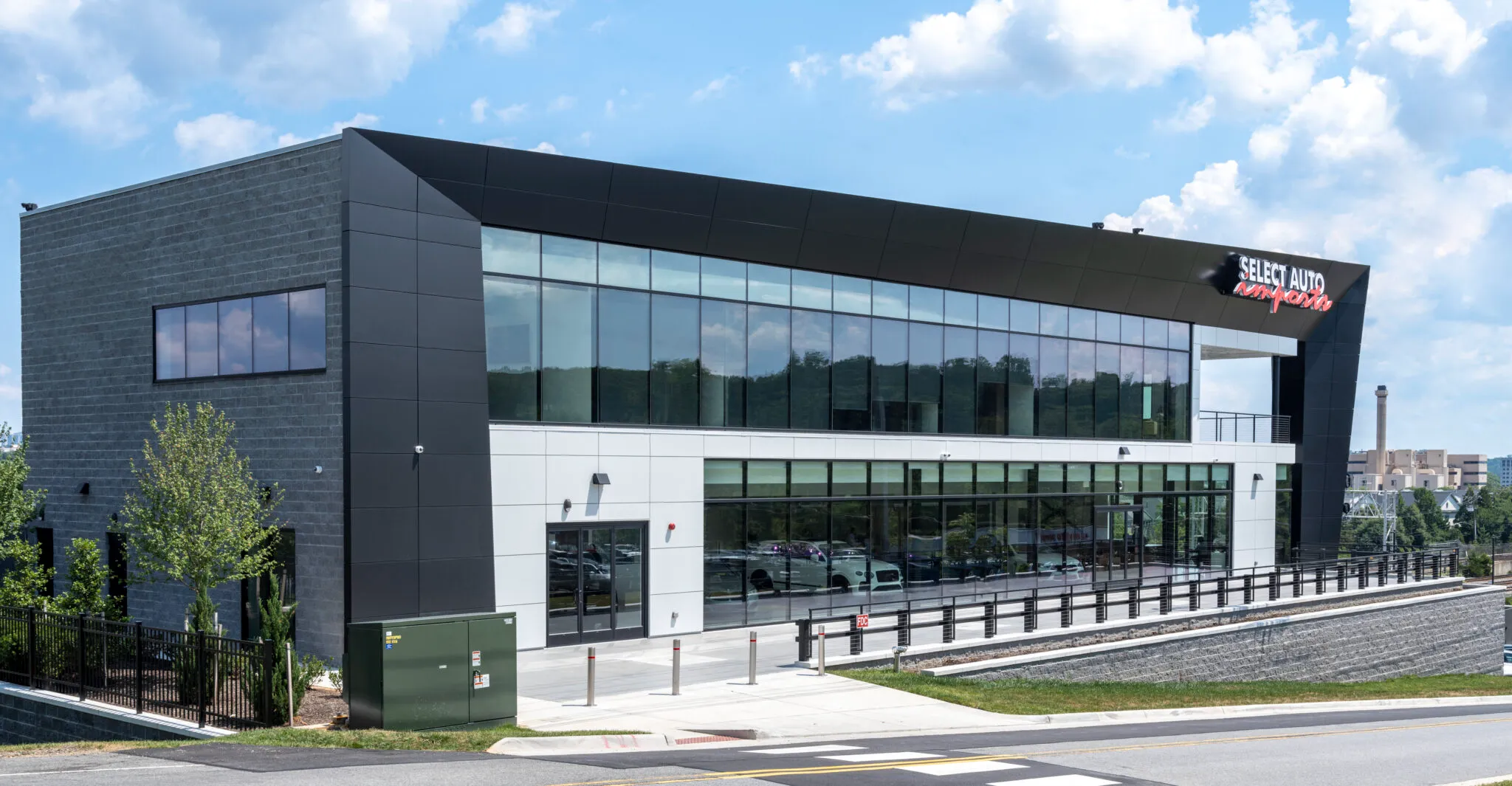
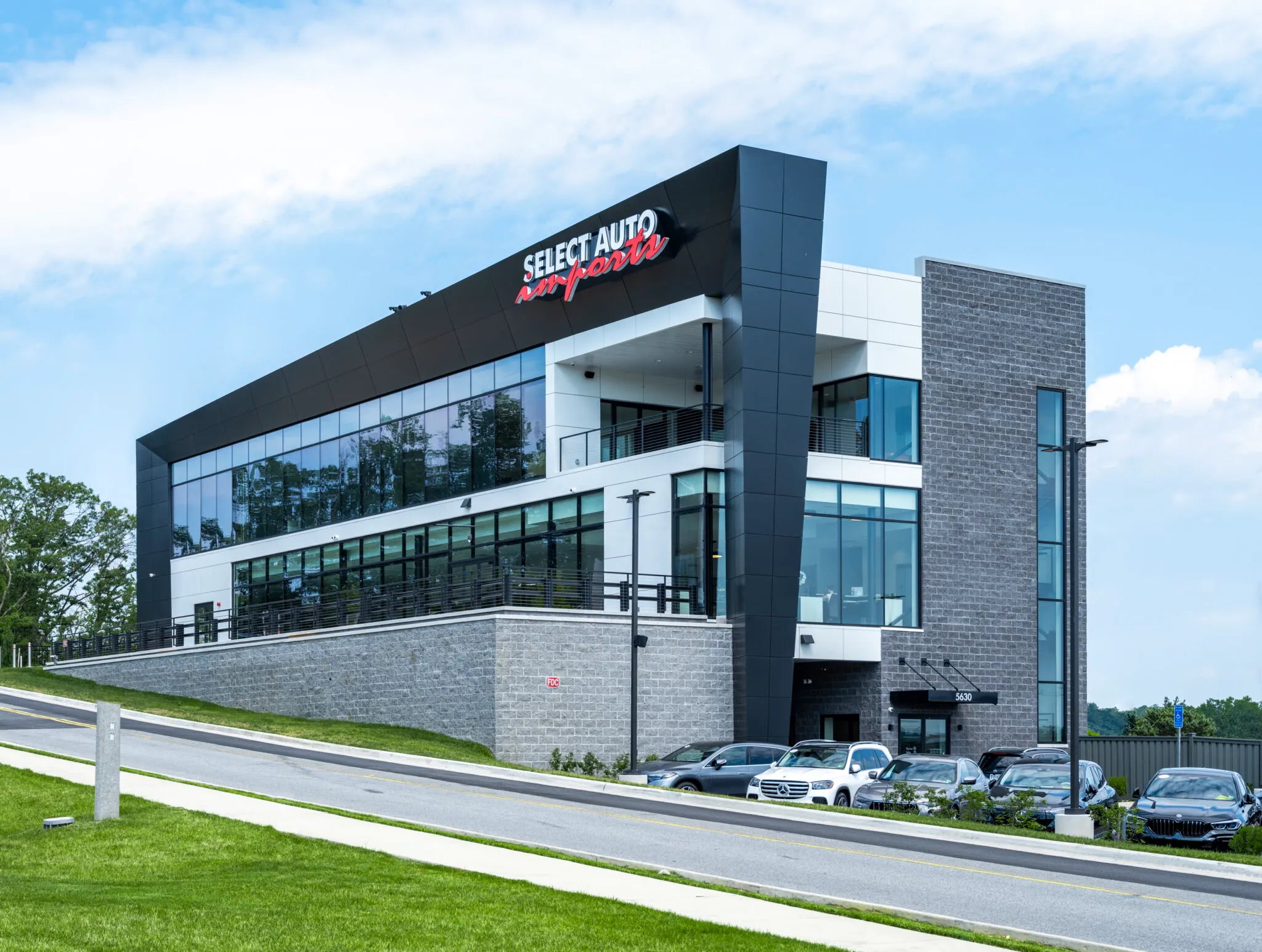
Penney Design Group is proud to showcase Select Auto Imports in Alexandria, Virginia—a striking, three-story, 17,000-square-foot automotive sales and service facility that redefines the customer experience in the luxury pre-owned auto market.

select auto imports 1

Turning Constraints into Opportunities

The project’s narrow, irregular site along Richmond Highway required a high degree of ingenuity in both design and construction. Bordered by commercial neighbors and shaped by zoning and access limitations, the lot demanded a compact but impactful footprint. Our design team transformed these constraints into opportunities, employing a vertical stacking strategy to consolidate showroom, office, and service functions within a cohesive architectural envelope.

Vehicle access and circulation were carefully choreographed to ensure seamless movement on the tight site, while pedestrian access was emphasized through a prominent entry plaza and refined urban frontage. Structural creativity played a major role: the stairwell, for instance, features expressive interior cross-bracing that doubles as both a seismic element and a bold architectural feature.

A Thoughtful Approach to Environmental Design

While not formally certified, Select Auto Imports reflects several principles of sustainable design. First and foremost, the project revitalizes a previously developed urban site—leveraging existing infrastructure rather than consuming undisturbed land. This commitment to adaptive site reuse supports a more sustainable growth model in Northern Virginia’s commercial corridor.

Natural daylighting was a key priority in the design. Expansive, high-performance glazing reduces the need for artificial lighting and enhances occupant well-being, while energy-efficient mechanical systems and LED lighting reduce the facility’s environmental footprint. Materials were selected not only for durability and aesthetics but also for their low-maintenance and long-life-cycle characteristics—minimizing waste over time.

Stormwater management strategies were also considered in the site design, with careful grading and drainage integrated to meet local environmental requirements and reduce runoff impacts.

select auto imports 5

Form, Façade, and First Impressions

The building’s exterior is a modern composition of clean lines, contrasting textures, and bold geometry. The sleek façade combines smooth architectural panels, high-performance glazing, and metal screening to create an identity that is both elegant and assertive. The black and silver palette offers a restrained sophistication, allowing the luxury vehicles inside to take center stage while still projecting a strong visual presence from the street.

At the entry, a tall vertical glass volume announces the main stair tower, becoming a beacon from Richmond Highway and inviting guests into the space. The form is dynamic yet composed—featuring subtle cantilevers, layered masses, and crisp detailing that express the precision and performance values of the dealership brand.

select auto imports 4

Elevated Interiors with Purpose

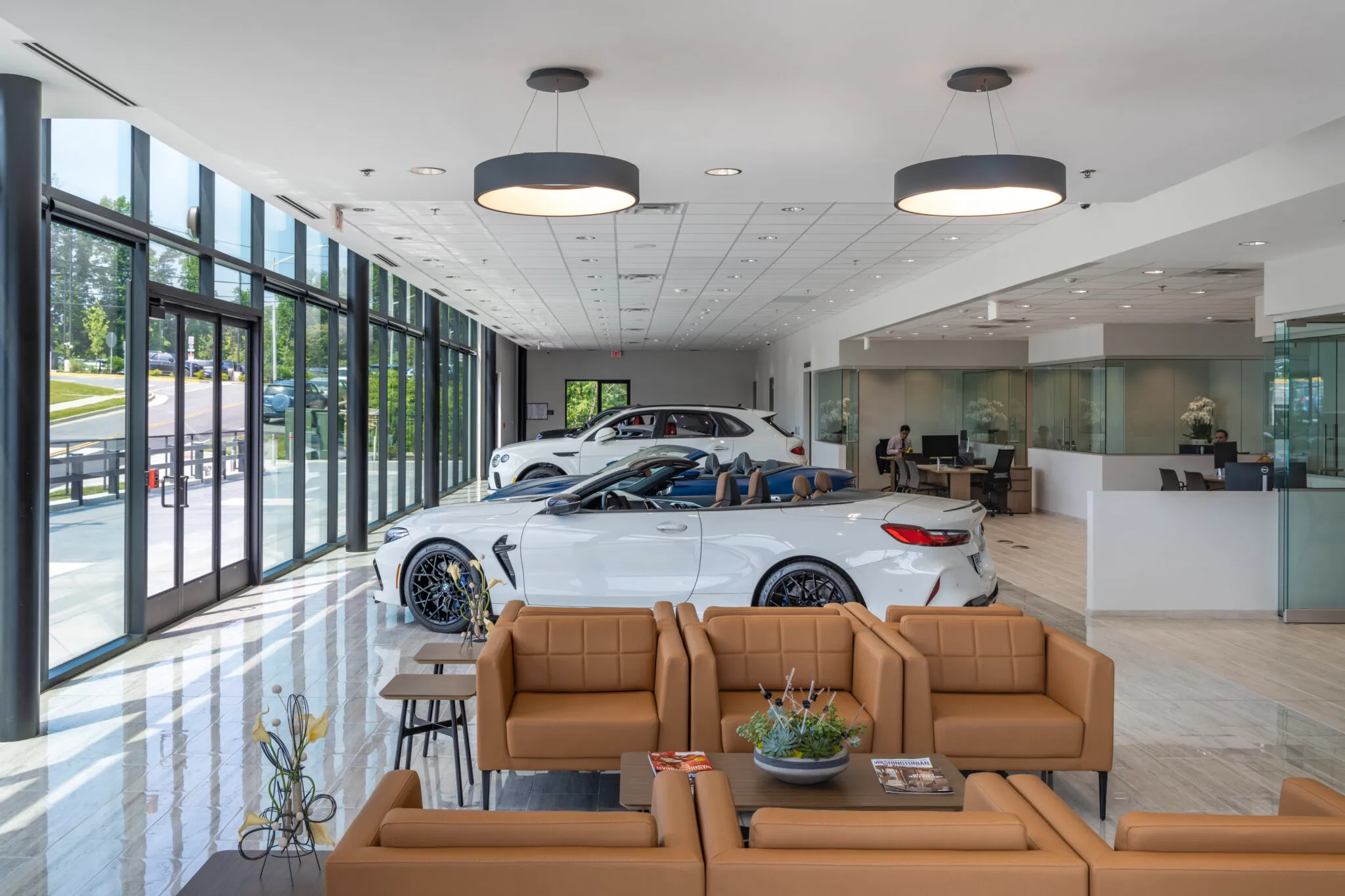
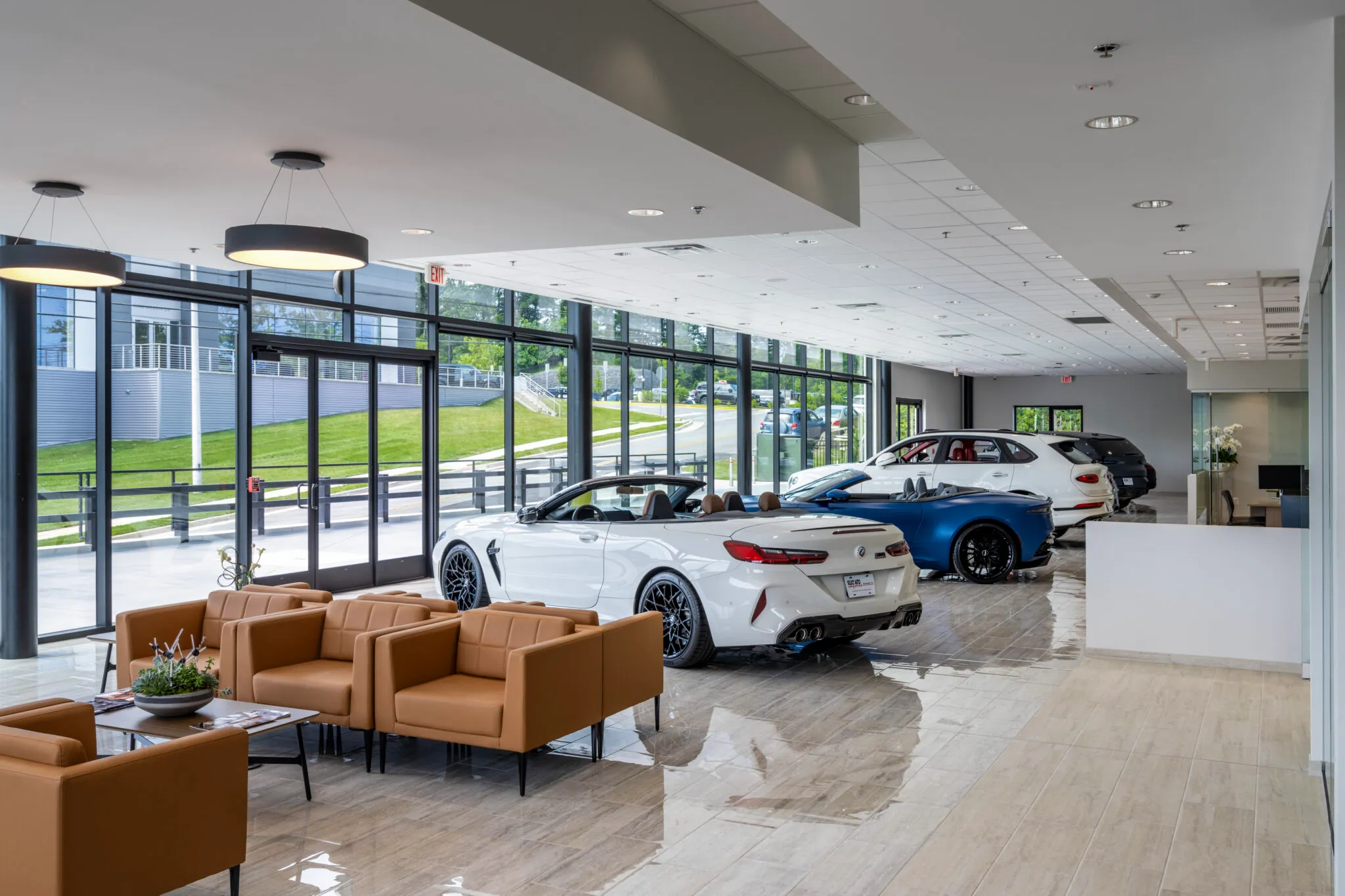
The refined materiality of the exterior continues inside. Expansive glazing, contemporary surfaces, and a light-filled interior palette create a welcoming environment that mirrors the quality of the vehicles on display. Glass-front sales offices provide openness and transparency, while warm woods and textured finishes add richness and contrast.

One standout element is the “coffee stop” area, clad in a textured black wave tile that introduces a tactile moment of hospitality within the retail space. It’s one of several thoughtful design gestures aimed at enhancing the customer experience.

The restroom finishes deserve special mention. Clean-lined contemporary tilework and full-height doors offer a level of privacy and elegance more commonly found in hospitality settings—a trend we hope to see adopted more broadly across the auto dealership sector.

select auto imports 3

Crafted in Collaboration

To complete the interiors, we teamed with Global Commercial Furnishings—a national leader in commercial-grade furniture, custom millwork, and Cambria quartz surfaces. Their craftsmanship and materials expertise were integral in translating our design vision into a cohesive, elevated customer environment. From custom sales desks to built-in cabinetry and reception pieces, every detail was carefully curated for both form and function.

We also worked closely with a talented team of engineers to support the technical execution of the project. The civil engineer was Tri-Tek Engineering Inc., the structural engineer was Tarantino Engineering Consultants, and the MEP engineer was Integrated Design Consultants.

select auto imports 2

A Dealership That Reflects the Brand

More than just a sales floor, Select Auto Imports is a brand-forward environment that communicates trust, sophistication, and quality. The building’s architectural language—clean, modern, and confident—acts as a quiet but impactful backdrop to the high-performance vehicles it houses. The result is a dealership experience that feels less transactional and more curated, aligning with the expectations of today’s luxury buyer.